

Google Search has evolved from a simple list of links into a more personal, human-like experience, using AI Mode and Personal Intelligence to understand your habits, memories, and needs — marking the moment search stopped feeling mechanical and started feeling intelligent.
I still remember the old days of Google Search — you type in a question, hit Enter, and get a blue sea of links. It was simple. It was fast. But it was impersonal. Almost like speaking to a library full of books that wouldn’t look at you. So when Google first teased AI Mode — a version of search that could answer like a chatbot — it felt like the start of something bigger.
And now, in 2026, we’ve crossed a new threshold. Google isn’t just answering your questions better — it’s trying to understand you. Not just the words you type, but the life you live behind those words. This is where Google’s Personal Intelligence update comes in — and honestly, it feels like the moment search stopped being a tool and started being... something almost human.
A Search Engine That Knows Beyond Words
Imagine planning a getaway. You type “best places to visit this summer” and instead of generic travel blogs, your search suddenly whispers something entirely different:
“Based on your hotel bookings in Gmail and family beach photos from last year, here are spots you’d actually love.”
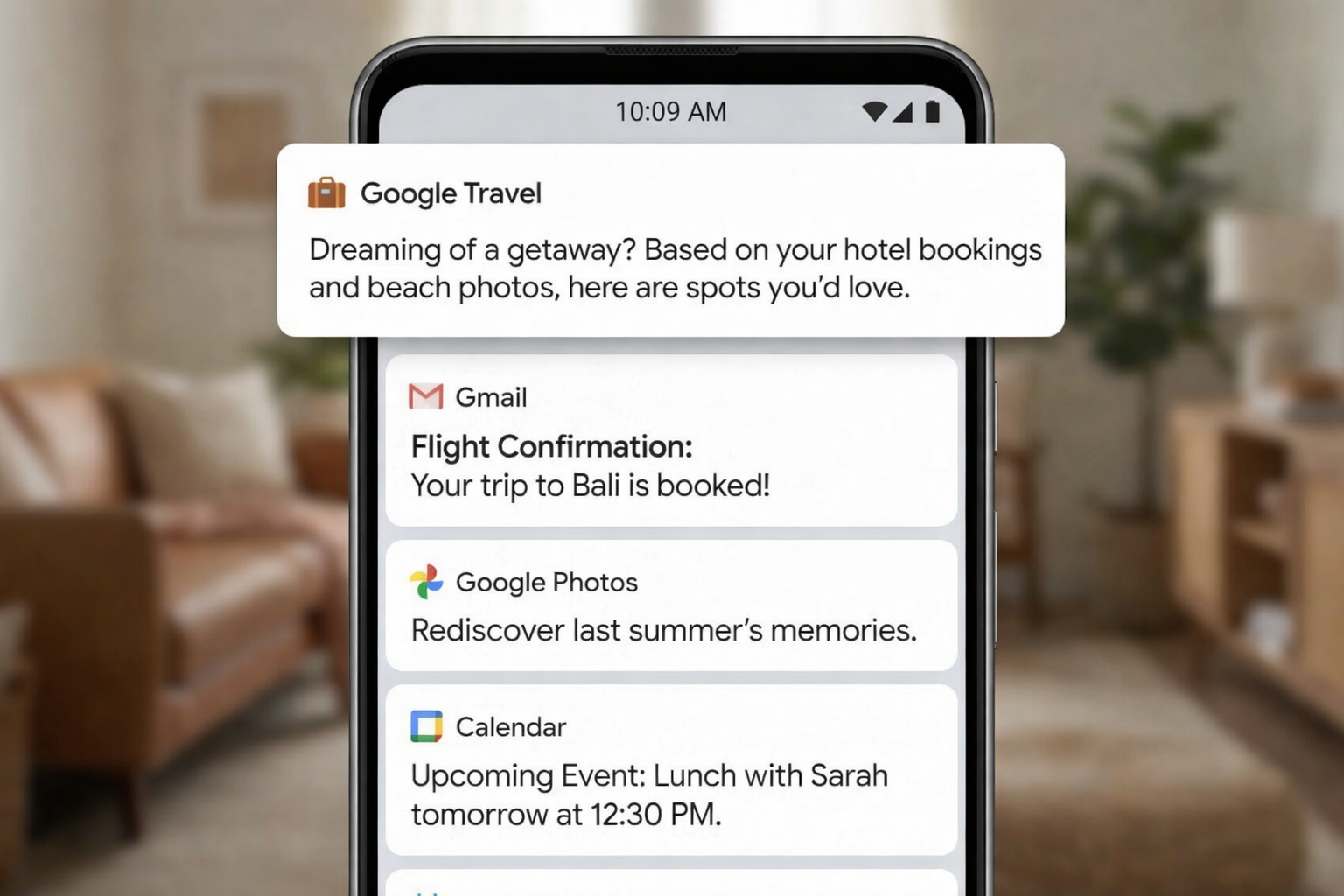
That’s no sci-fi dream anymore — it’s Personal Intelligence, the newest layer of Google’s AI Mode in Search. Google’s AI can now — only if you choose to let it — pull context from your Gmail inbox and Google Photos and serve suggestions that feel like they’re tailored to your life, not just your words.
This isn’t about creepy stalking. It’s about curating meaning from the things you already trust Google with — your messages, your memories, your snapshots. And Google says you have full control: you can decide if, when, and how AI Mode gets connected to your apps.
Not Just Search, but Understanding
Let’s take another example:
You’ve got a stack of Gmail receipts from last Christmas shopping, mixed with Photos of outfits you’ve snapped over the years. Ask Google for gift ideas or wardrobe picks this year? AI Mode might tell you the perfect combo you hadn’t even thought of — because it sees what you’ve actually done, not what you say you like.
That’s a massive shift. For years, search engines treated us as anonymous strangers — people who typed keywords and expected relevant links back. Personal Intelligence flips the script: it treats you like a known individual with a story, a history, and patterns worth understanding.

A Future That’s Helpful and Trustworthy?
Here’s the part that’s fascinating — and honestly, a bit tense. Because for such a personal AI experience to work, you have to let it see a little more of who you are. But Google wants you to trust that this isn’t training the AI on all your data forever. Instead, the system uses what you share in the moment to figure out what you really mean — and then tailors its answers accordingly — while keeping your core content private.
Google even says the AI won’t train on your Gmail or Photos directly — it just uses them as context for the answers it gives you here and now. And if the AI gets something wrong? You can correct it and teach it — or just turn it off entirely.
Why This Matters More Than You Think
Think of it like this: search used to be a conversation between you and the web. Now it’s becoming a conversation between you and your own digital self — the version of you that lives in your emails, photos, history, and habits. AI Mode doesn’t just fetch information anymore — it tries to understand you well enough to help you in a way that feels intuitive and meaningful.
This is a defining moment — not just for Google, but for how we interact with technology. It’s the difference between asking a question and having someone who knows enough about you to answer it like a friend who’s seen your life unfold. And whether that feels magical or weird — well, that’s the story of our AI era.
In the End, It’s About Trust — And What You’re Willing to Share
Personal Intelligence in Google Search isn’t mandatory. It’s optional. You choose to opt in. But once you do, you’re giving the AI a lens into your world that makes search — and maybe all of AI — feel profoundly personal.
And that, dear reader, is not just a tech update. It’s a moment when your digital life learns to speak back to you — not just data, but dialogue.


 Travel
  Studies
  Food
Food  Fashion
  Technology
  Health





All Comments (0)