

AI used to feel like hype — flashy demos and viral experiments. But something quieter is happening now. Google’s Gemini isn’t just a chatbot anymore; businesses are using it every day to automate support, write code, analyse reports, and save hours of work. And when AI starts blending into real workflows instead of headlines, that’s when you know the shift is real.

I used to think the AI story was all about flash.
Big demos.
Viral clips.
Chatbots answering weird prompts.
But recently something shifted. And it didn’t happen on stage.
It happened in the quiet numbers that companies don’t usually publish — the backend usage stats, the API calls, the business integrations that don’t make headlines.
Google’s Gemini — the name you’ve probably heard somewhere between hype cycles — is now being used not just by tinkerers, but by real companies, at an astonishing scale. And the more I think about it, the more it feels like we’re watching something subtle but seismic.
For months, people have asked me whether Gemini is just “another AI model.” But after reading a report showing that API requests jumped from about 35 billion to 85 billion in just a few months, I had to rethink that question. That isn’t curiosity. That’s actual business adoption — builders embedding AI into workflows, software, and systems people rely on every day
And here’s where things get interesting:
This growth isn’t theoretical. It’s not just “some company somewhere uses AI.” It’s happening in ways that touch the way work actually gets done.
How Businesses Are Using AI (Beyond the Hype)
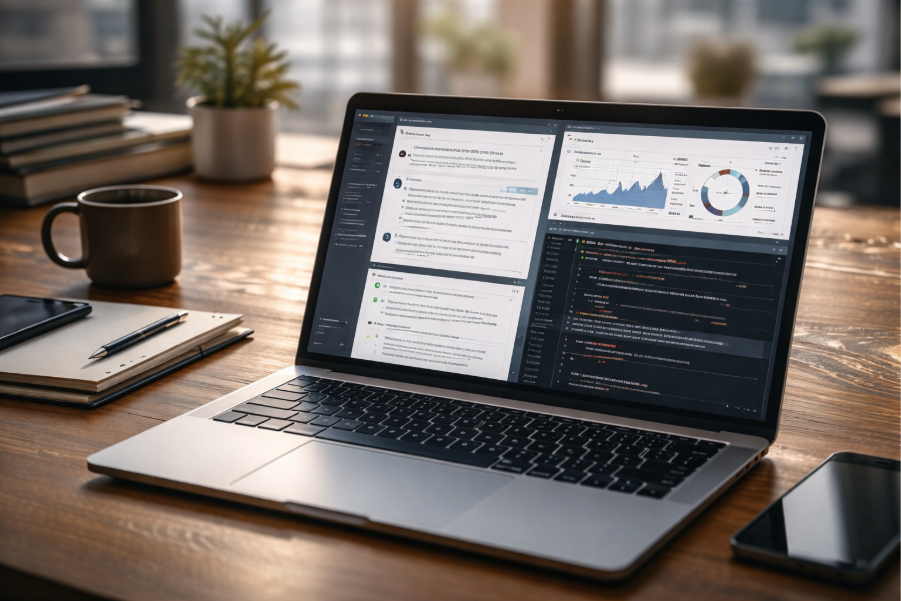
Here are real, concrete examples of how companies are putting Gemini-style AI to work
Automating Customer Support
Some companies are feeding their support tickets into AI to automatically generate responses, route issues to the right team, and even prioritise urgent problems. That means fewer back-and-forth replies and happier customers — without human agents doing all the typing.
Summarising Reports and Documents
Finance teams I’ve talked to use AI to summarise long reports, extract key figures, and generate concise insights. Instead of reading a 30-page PDF line by line, they get a focused summary they can act on — fast.
Assisting Software Engineering
Developers are using AI inside their code editors to suggest snippets, find bugs, and explain complex sections of legacy code. It’s like having a second pair of eyes that never gets tired.

Content Creation and Personalisation
Marketing teams are using AI to generate drafts of blog posts, personalise email campaigns at scale, and even create different versions of ads for different regions — all in a fraction of the time it used to take.
Automating Internal Workflows
Some enterprises are building AI-powered tools that automatically handle routine tasks — extracting data from forms, tagging content, generating internal summaries — freeing teams from repetitive manual work.
These aren’t futuristic ideas. They’re happening now — in everyday business processes.
And that’s where the quiet revolution lies.
This isn’t the kind of AI noise that gets retweeted.
This is work getting done differently.
When a developer in a startup uses AI to generate code — that’s evolution.
When a finance team automates data summarisation — that’s productivity.
When a support centre cuts response times by half thanks to AI — that’s impact.
And according to the data, companies aren’t just experimenting. They’re consuming AI at scale — billions of requests every month, built into real systems people rely on
What I find fascinating is how this flips the script on “AI hype.”
For a long time, we treated AI like a spectacle — flashy, noisy, unpredictable. But true transformation doesn’t always shout.
Sometimes it creeps up through usage statistics and backend systems.
Google Cloud isn’t just selling storage and compute anymore. It’s selling AI that businesses depend on — and that’s reflected in the numbers.
Services like Gemini stop feeling like fun toys and start feeling like invisible infrastructure — the kind you only notice when it stops working.
So if you ever feel like AI is just hype, look at the data.
Because this feels different.
It feels like the moment when AI stops being a conversation topic…
…and starts being a default tool in the way companies actually build, operate, and compete.
Not in flashy demos.
Not in trending tweets.
But in the quiet, everyday work of real businesses.
That’s not noise.
That’s adoption.

 Travel
  Studies
  Food
Food  Fashion
  Technology
  Health




All Comments (0)