

OpenAI has launched the Codex app — a dedicated workspace for managing multiple AI coding agents. It promises to transform how developers collaborate with AI on complex, long-term projects.
There are moments in technology that feel like small upgrades at first — quiet, almost invisible nudges forward. And then there are moments that fundamentally shift how we work. The launch of OpenAI’s Codex app falls firmly into the second category.
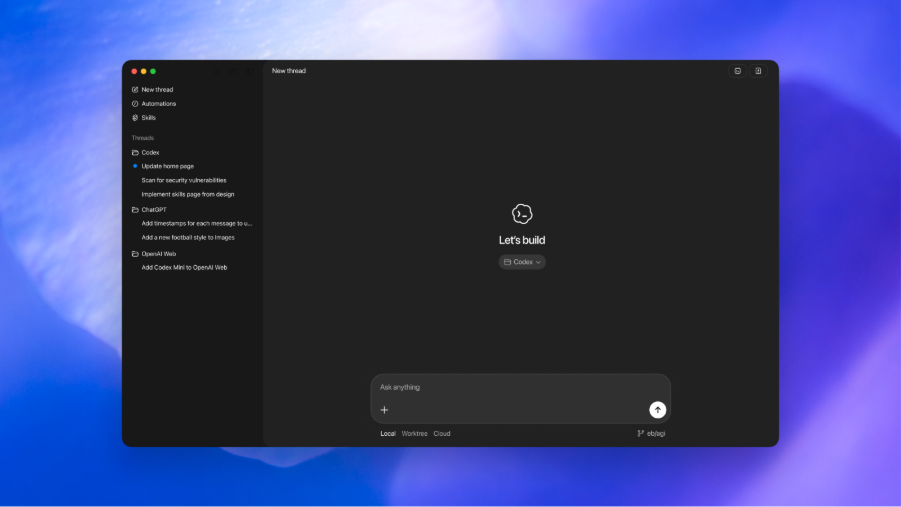
Earlier this week, developers around the world began noticing something new on their Macs: a fresh app icon labeled Codex. In a landscape crowded with code editors, terminal windows, and project dashboards, this one was different. It wasn’t just another editor plugin or UI skin. It was the first dedicated command center built around autonomous AI coding agents, and it came straight from the team behind ChatGPT.
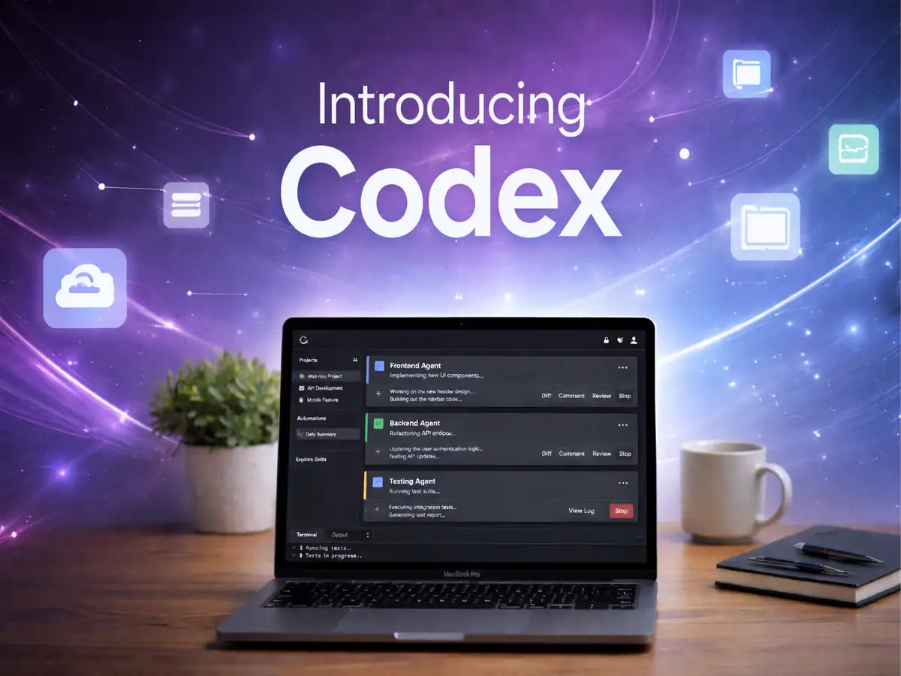
This is a step that many have quietly anticipated, but few expected to arrive with such clarity: the moment when AI moves beyond chatboxes and assistants and into the heart of how software is designed, managed, and orchestrated.
A New Kind of Workspace
Think back a decade. Integrated development environments were already powerful, but they were still manual. A human writes a line of code, hits compile, oversees testing, tweaks and iterates. Tools helped, but they didn’t drive the process.
Now imagine an environment where you don’t just “use” AI to generate snippets — you orchestrate AI agents that can work in parallel, reason about long tasks, break down complex projects, and even monitor progress over days or weeks. That is what OpenAI’s Codex app aims to be: not simply a tool, but a workspace designed for autonomous assistants rather than human fingers on a keyboard.
Instead of opening a browser and juggling tabs, or issuing commands one at a time in a CLI, developers can now see all of their agent processes in one place. This central interface changes the relationship between human and machine — from reactive to collaborative.
Building a Parallel Workforce
One of the most striking aspects of the Codex app is how it reframes the concept of task delegation.
In traditional software work, a developer assigns a task to themselves and sees it through. With the Codex app, a developer can now define a set of objectives and let multiple AI agents pursue them concurrently. Need to write a feature, test edge cases, document behavior, and refactor legacy code? Those can now be parallel pipelines rather than sequential chores.
This isn’t speculative anymore. OpenAI has already shipped the app on macOS, and developers with access have begun to report exactly this kind of experience: agent delegation, automated follow-ups, and a higher-level view over complex workflows. The Codex app doesn’t just help you write code — it helps you manage code creation.
Why This Matters
To understand the potential impact, it helps to think about how software engineering has evolved.
For decades, tools have sought to accelerate human beings: better editors, smarter autocompletion, integrated debugging. Each innovation made the developer faster, but still human-led. The Codex app is different because it is designed for AI-led progress with human oversight.
We’ve reached a point where models can generate code, yes — but now they can organize themselves into workflows, monitor their own performance, and provide feedback loops without constant human intervention. It’s not autonomy in a science-fiction sense, but it is autonomy in workflow design.
Questions Still on the Table
Of course, with any major shift come new questions.
Security, for instance. Sometimes AI code generators can hallucinate insecure patterns. When agents are building and refactoring across a project, how do we ensure safety, auditability, and accountability?
Then there’s the question of adoption. The app is currently available on macOS, which means there’s still a segment of developers on other platforms who haven’t yet experienced this new workflow firsthand.
Finally, this raises a broader cultural question: as AI becomes a partner in building software, how do teams organize? Will job roles shift? Will engineering managers begin to think more like AI supervisors? These are conversations just beginning.
A Glimpse Into the Future of Work
The Codex app release is more than another product launch — it’s a signal.
It tells us that the age of AI assistants confined to chat windows is giving way to a new era where AI systems are embedded into the very infrastructure of how we build and manage technology. We are no longer asking AI to simply help us write code. We are asking it to understand, organize, and advance development work with us as collaborators.
This marks a subtle but profound shift. And while the full effects of that shift will play out over years, if not decades, the launch of the Codex app is one clear milestone on that journey.
For anyone invested in software, AI, or the future of digital work, this is a development worth watching closely.

 Travel
  Studies
  Food
Food  Fashion
  Technology
  Health





All Comments (0)