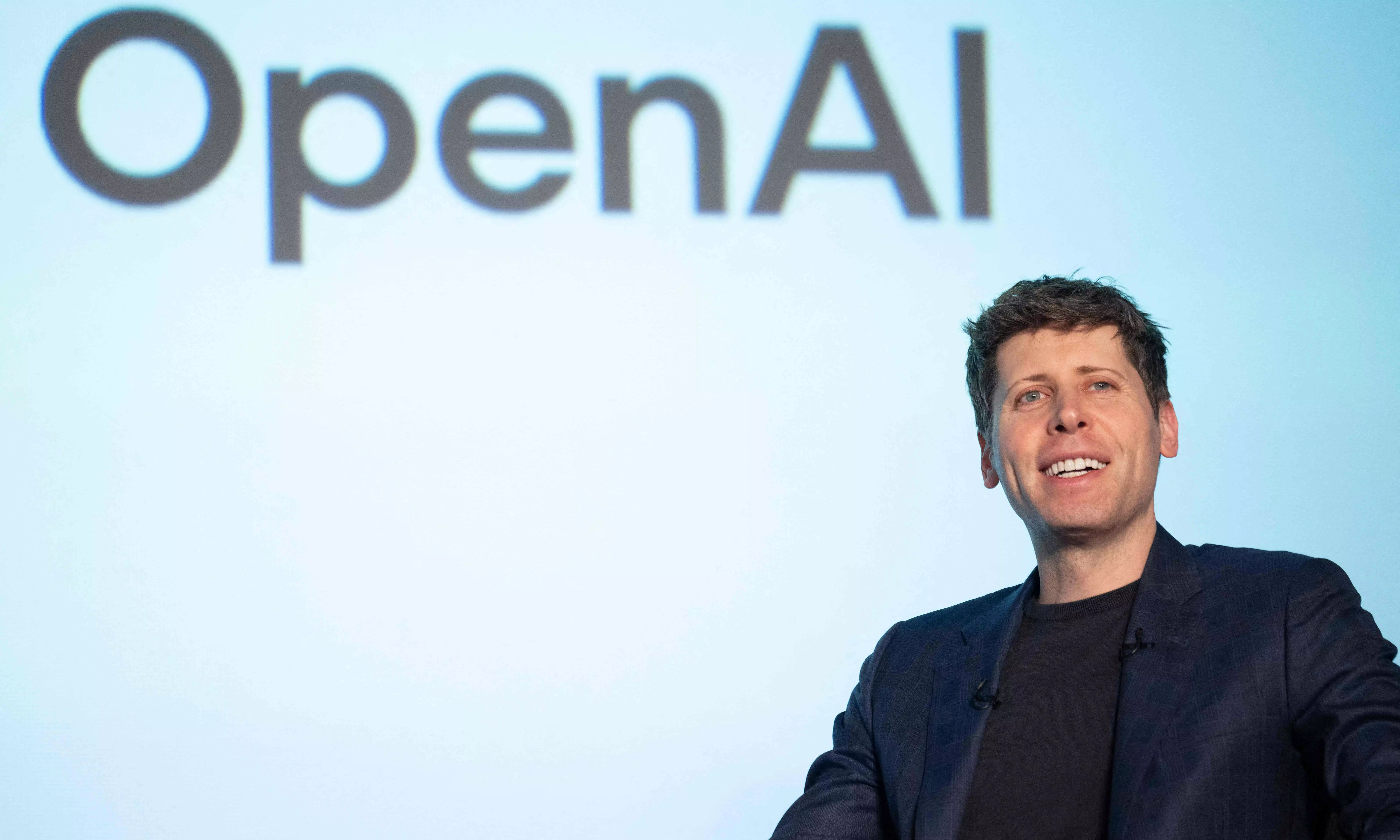

OpenAI has brought aboard OpenClaw creator Peter Steinberger to lead development of personal AI agents, a move that could be one of Sam Altman’s boldest bets on agentic AI. The decision also highlights a missed strategic opportunity for Anthropic and underscores a broader industry shift toward autonomous AI systems.
In mid-February 2026, OpenAI made a strategic decision that has shaken the world of artificial intelligence: it announced that Peter Steinberger, the developer behind the viral open-source AI agent framework OpenClaw, is joining the company to spearhead work on next-generation personal agents. This wasn’t just a standard hiring — it’s been described by some industry watchers as one of CEO Sam Altman’s boldest pushes yet into agentic AI, and a significant competitive setback for Anthropic, which once had early access to Steinberger’s work but failed to secure a partnership or acquisition.
The implications of this acquisition — or rather, this talent recruitment and ecosystem alignment — extend far beyond one individual joining a new team. It marks a pivotal moment in the ongoing evolution from simple AI assistants, like chatbots, toward autonomous AI agents that can perform complex tasks with limited human supervision. These agents represent the next frontier of artificial intelligence: tools that can not only respond to user queries but also act on behalf of users, coordinating across systems and workflows to accomplish real-world goals.
To understand why this matters, we need to look at what OpenClaw was, why it became such an attractor of attention, how Anthropic missed a major opportunity, and what OpenAI’s move means for the future of intelligent automation.
What Is OpenClaw and Why Did It Explode in Popularity?
OpenClaw began life in late 2025 as a highly adaptable, open-source AI agent framework developed by Austrian engineer Peter Steinberger. Although it was initially released under names like Clawdbot and later Moltbot, the project quickly gained traction for its compelling premise: a tool that could operate autonomously on users’ devices, manage tasks, and integrate with common real-world applications.
According to open-source project metrics, OpenClaw racked up an extraordinary number of stars on GitHub in a short span — tens of thousands — and drew millions of visits in a single week, becoming one of the most talked-about AI projects of the year.
What made OpenClaw stand out was its agentic nature. Traditional large language models (LLMs) like GPT-style models are excellent at generating text and answering questions, but they do not automatically perform tasks unless a human tells them to. OpenClaw, by contrast, allowed developers and users to build persistent agents capable of:
-
Managing emails and calendars autonomously
-
Interfacing with messaging apps like WhatsApp, Slack, and others
-
Browsing the web to gather information
-
Executing multi-step or long-running tasks without ongoing human prompts
This shift — from assistant to agent — represents a deeper transformation in how AI can be applied. In a sense, OpenClaw was a bridge between simple AI interactions and fully delegated automation.
From Viral Open-Source Project to OpenAI Team Member
Rather than keeping OpenClaw as an independent open-source startup — which many assumed would be its next step — Steinberger opted to join OpenAI. According to statements from both parties, he believed that OpenAI’s infrastructure, resources, and mission would allow his vision for agentic AI to scale faster and have broader impact than if he tried to build a standalone company.
This is significant for several reasons:
-
Talent acquisition as strategy:
By bringing Steinberger and his expertise in agent frameworks into OpenAI, the company gains not just technology — it gains strategic human capital that understands autonomous systems at a granular level. -
Open-source continuity:
Although OpenClaw will now operate under a foundation supported by OpenAI, it is intended to remain open source, preserving community involvement and collaboration. -
Acceleration of agentic AI:
Steinberger’s inclusion signals OpenAI’s commitment to prioritizing ‘agent systems’ as a core part of its future development strategy — a move that could accelerate adoption of autonomous AI across consumer and enterprise products.
Sam Altman’s own comments on the hire emphasize this intent: he called Steinberger a developer with “amazing ideas about the future of very smart agents interacting with each other,” adding that the future of AI will involve multi-agent systems that coordinate and collaborate in solving tasks.
Why This Is a Blow for Anthropic
The Times of India article characterizes the development as potentially Anthropic’s biggest strategic fumble yet — and there’s good reason for that description.
Anthropic, a company formed by former OpenAI researchers and backed by major funding rounds, was one of the first to show interest in OpenClaw’s work. In fact, early access to Steinberger’s project was reportedly in Anthropic’s hands before it exploded in popularity. Yet, for reasons that have not been fully disclosed, Anthropic did not close a deal or recruit Steinberger. That opportunity was taken by OpenAI instead.
This misstep — failing to retain or integrate a key innovator turning agent frameworks into practical tools — could have strategic implications in a world where autonomous agents become increasingly central to AI adoption. As AI shifts from chat-based assistants to systems capable of acting on behalf of users, companies that control or lead in agent technology stand to gain a competitive edge.
In addition to the setback with OpenClaw, Anthropic has been investing in its own agent efforts, such as Claude Opus 4.6 and Claude Code, designed to manage complex coding tasks and workflows. But losing momentum to a viral open-source project and then to OpenAI underscores the intensity of the competition in this space.
Agents Are the Next Frontier: What That Means
The rapid rise of OpenClaw and the strategic move by OpenAI highlight a broader industry shift: AI is moving beyond simple conversational interfaces toward task-oriented autonomous systems that can handle real-world jobs with minimal supervision.
This evolution is often referred to as the agentic AI era, where systems are capable of understanding context, planning actions, executing sequences, and integrating with external environments — all while adapting to feedback. This stands in contrast to traditional AI chat interfaces, which are reactive and generally await human prompts.
Agentic AI is gaining traction across multiple fronts:
-
Workflow automation in workplaces
-
Personal digital assistance for everyday tasks
-
Enterprise systems that orchestrate complex data pipelines
-
Coding agents that debug, write, and optimize code
-
Task coordination across cloud services and applications
According to recent industry reports, both OpenAI and Anthropic are pushing agentic AI into business environments, encouraging companies to rethink work structures where human professionals supervise fleets of AI workers rather than doing every task manually.
This shift toward delegated and autonomous AI aligns with broader trends — analysts now see AI agents as a transformational technology that could redefine productivity, job design, and human-computer interaction in years to come.
The Security and Policy Dimension
While agentic AI represents exciting potential, security and safety considerations are fundamentally important. OpenClaw’s viral popularity has not been without controversy.
For example, government entities in China and South Korea issued warnings about using OpenClaw due to cybersecurity and data privacy concerns. These concerns stem largely from how autonomous agents can operate with broad permissions, access sensitive systems, and interact with external networks — potentially creating vectors for data leaks or cyberattacks if not properly configured.
Moreover, academic research indicates that agentic systems pose unique risks that differ from traditional predictive models. Studies on the security of personalized agents (like OpenClaw) show vulnerabilities related to how agents process user intents, execute tools, and recall memory, all of which can be exploited under certain scenarios.
These issues underscore why companies like OpenAI and research organizations emphasize safety precautions, testing frameworks, and alignment work as they push agent technologies into public and enterprise use.
OpenAI vs. Anthropic: A Competitive Snapshot

The competitive landscape between OpenAI and Anthropic has intensified over the past year. Both companies are innovating rapidly, and their strategies reflect different approaches to addressing the agentic future.
-
OpenAI has focused on integrating autonomous agent frameworks directly into its product roadmaps and harnessing open-source ecosystems to accelerate adoption.
-
Anthropic has pursued safety-oriented research, large investment rounds, and enterprise-centric tools like Claude Code for specialized workflows.
-
The OpenClaw development episode highlights the costs of missed partnerships and the value of embracing emerging trends early.
Although competition drives innovation, it also raises questions about interoperability, standards, and ethical deployment. For instance, both OpenAI and Anthropic — along with other major players — are part of the Agentic AI Foundation under the Linux Foundation, which aims to establish neutral, open standards for AI agents so that adoption is collaborative rather than fragmented.
These standards are critical as agent systems become more widely used, ensuring developers and enterprises can build trustworthy, secure, and interoperable tools that align with broader community needs.
What This Means for Developers and Users
For developers, the emergence of agentic AI and the OpenClaw saga presents both opportunity and caution:
-
Open-source enthusiasts see agent frameworks like OpenClaw as a democratizing force that lowers barriers to building intelligent assistants.
-
Enterprise developers are exploring how to integrate autonomous agents into workflows that streamline operations and reduce overhead.
-
Security professionals warn of new risk surfaces that come with granting AI agents broad privileges.
Users can expect AI products that feel less like query-based responders and more like digital co-workers that can anticipate needs, take initiative, and operate continuously in the background. While this promises gains in convenience and efficiency, it also means users and organizations must think carefully about governing control, access policies, and monitoring agent behavior.
The Future of Agentic AI: Toward Collaboration and Integration
Despite competitive rivalries, the future of agentic AI likely involves collaboration across ecosystems. Projects like the Agentic AI Foundation emphasize openness and shared innovation — an approach that encourages community-driven development, neutral governance, and broad compatibility.
In this environment:
-
Open standards will enable agents from different providers to communicate and cooperate.
-
Shared protocols like AGENTS.md will ensure consistency in how agents interpret instructions and context.
-
Community-led security work will reduce risk while expanding adoption.
As agents evolve from early experiments to practical tools, developers, companies, and policymakers will need to balance ambition with responsibility, ensuring that autonomous AI amplifies human capabilities while guarding against misuse or unintended consequences.
Conclusion: A Strategic Inflection Point for AI
OpenAI’s recruitment of Peter Steinberger and integration of OpenClaw into its agent roadmap is more than a hiring — it’s a strategic bet on the future of AI. It reinforces OpenAI’s leadership in a key emerging area and underscores how open-source innovation can rapidly influence global AI trajectories.
For Anthropic, missing this opportunity may serve as a lesson about agility, timing, and the significance of early engagement with grassroots projects that capture developer imagination.
In the end, the OpenClaw story is a microcosm of the larger agentic AI revolution — a transformation that is reshaping how AI systems behave, how humans interact with them, and how the next generation of intelligent tools will augment human tasks in the real world.

 Travel
  Studies
  Food
Food  Fashion
  Technology
  Health




All Comments (0)