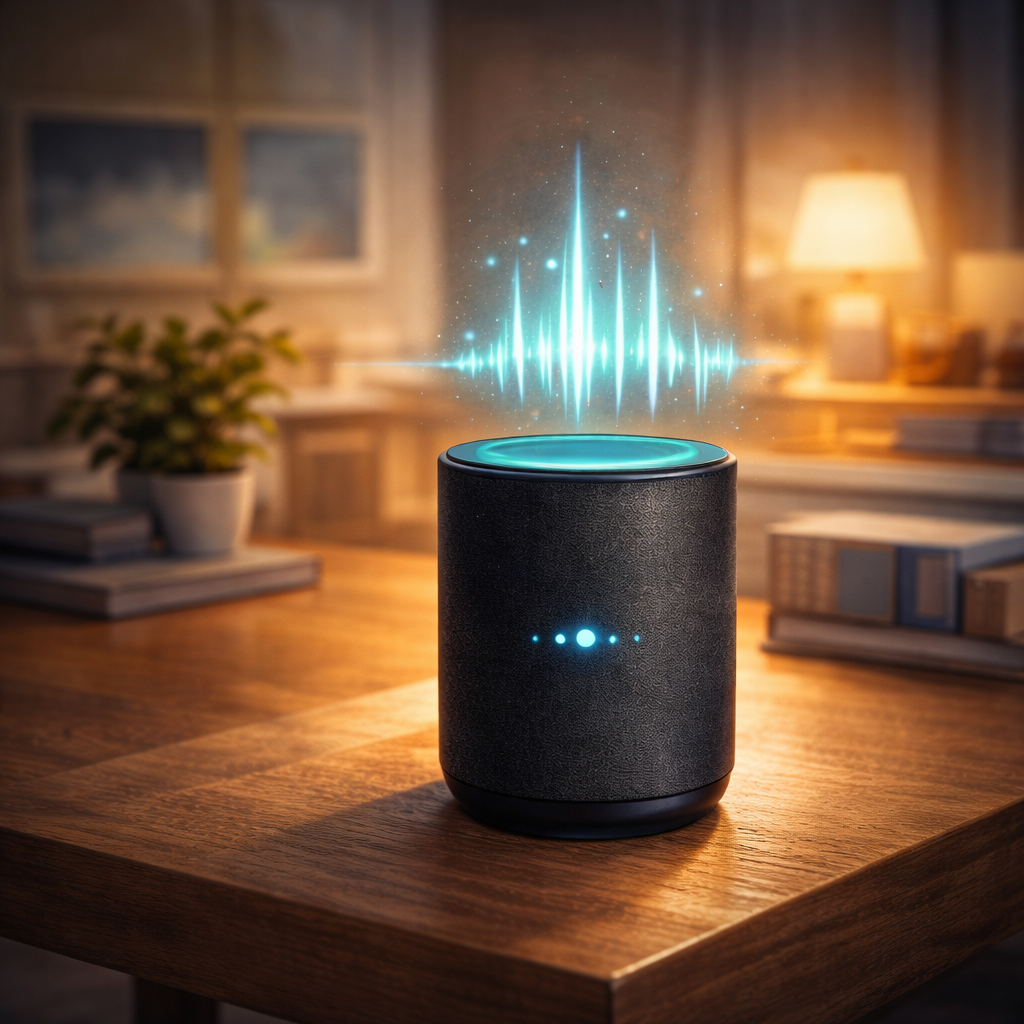

OpenAI is working on a revolutionary AI device with no screen — only voice. Instead of typing or tapping, users will talk naturally with their AI like a real conversation. This shift could redefine how we interact with technology in daily life.
Tech big shots have been talking about display-free gadgets for years. But now it looks like OpenAI is actually making one — and it’s not a phone, tablet, or watch. Instead, it’s a voice-first AI device that you talk to, and it talks back.
What’s the Big Idea?
OpenAI — the company behind ChatGPT — is reportedly working on its first personal AI device. But here’s the twist:
It might not have a screen at all.
Instead, it will rely on voice.
That means you interact with it by talking and listening, just like a human conversation — no typing, no tapping — just voice.
This concept is part of a bigger shift in tech: moving away from screen-centric devices to audio-first interaction — something that feels more natural and less distracting.
Why Voice, Not Screens?
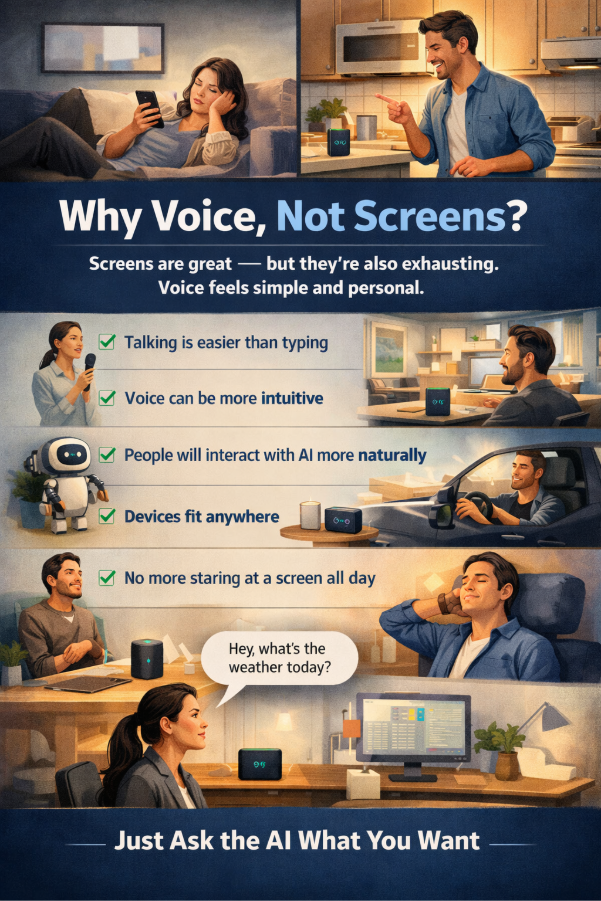
Screens are great — but they’re also exhausting. People scroll endlessly, get distracted, and can’t focus. Voice, on the other hand, feels simple and personal.
OpenAI believes that:
? Talking is easier than typing
? Voice can be more intuitive
? People will interact with AI more naturally
? Devices can fit in more places (like kitchens or cars)
? You don’t need to stare at a screen all day
So instead of tapping tiny icons, you’ll simply ask the AI what you want.
How They’re Building It
Behind the scenes, OpenAI is doing something big:
-
They’re reorganizing teams
-
Engineers, researchers, and product folks are joining forces
-
The company wants to improve its audio models
-
These voice models will sound more natural — almost human-like
-
They’ll handle interruptions and overlapping speech (where you and the AI speak at the same time) — something ChatGPT can’t do well today
This means the AI doesn’t just respond — it reacts like a real conversation partner.
When Will It Arrive?
The new audio AI models are expected early in 2026, and they’re meant to pave the way for the device itself — which could launch late 2026 or early 2027.
Some leaks even suggest the device could be pocket-size or tabletop-friendly — not a screen-heavy gadget, but more like a smart companion that listens and talks back.
What This Means for You

-
You won’t look at screens to interact with your AI — you’ll just talk
-
No more typing — ask AI to write essays, set reminders, plan trips, etc.
-
It could live in your home, car, or office — like a virtual helper
-
Screen fatigue might start to fade — voice becomes the new normal
-
This could bring AI into everyday life in a deeply natural, human way
Voice isn’t the future — it’s happening now. And if this device delivers on its promise, it could feel like talking to a smart friend, not a machine.
In Simple Words
OpenAI isn’t just making a gadget — it’s trying to rewire how we use technology.
Instead of staring at screens all day, we might soon talk to AI like it’s another person — and that’s closer than you think.


 Travel
  Studies
  Food
Food  Fashion
  Technology
  Health





All Comments (0)