

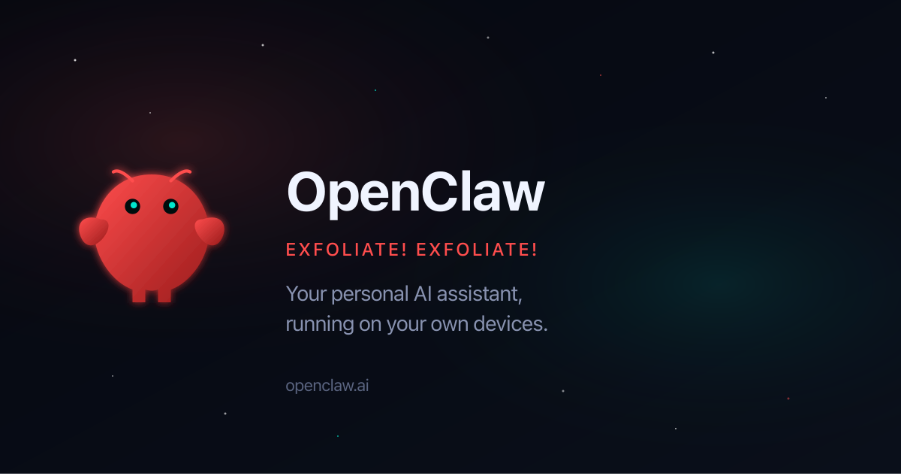
What started as a weekend AI experiment quietly exploded into one of the fastest-growing open-source projects in tech. Now rebranded as OpenClaw, it’s redefining how personal AI agents run locally — and who controls them.
The open-source AI assistant once known as Clawdbot has officially completed a rapid and unusual rebranding journey, now settling on the name OpenClaw as it continues its surprising rise in popularity and influence within the developer community.
Originally launched as a personal weekend project, this AI agent quickly became one of the fastest-growing open-source AI experiments in recent memory. However, as the project evolved — and as public interest exploded — so did challenges around naming, legal issues, security, and community governance.
A Project That Grew Overnight
Clawdbot began in late 2025 as a simple AI tool created by Austrian engineer Peter Steinberger. What was initially the result of a weekend hack quickly attracted attention from developers and AI enthusiasts around the world. Within a matter of weeks, the project’s GitHub repository crossed the 100,000 star milestone, and its pages garnered about 2 million visits in a single week, signaling extraordinary momentum.
The original name — Clawdbot — was inspired by a playful theme that referenced a mascot reminiscent of lobster claws, which seemed fitting for an open-source tool designed to “grab” and execute tasks like a personal digital assistant. But the name soon proved problematic.
Rebranding Amid Legal Challenges
As Clawdbot gained traction, it ran into a legal snag. Anthropic, the AI research company behind the Claude brand and its associated mascots, raised concerns that the name Clawdbot was too similar to their trademarked material. This prompted the first of several name changes.
In late January 2026, Steinberger rebranded the project as Moltbot — a name inspired by the biological process of molting, reflecting both growth and evolution.
But even that name resonated poorly with parts of the community and failed to achieve lasting recognition.
Eventually, after careful trademark research and outreach — including checking with organizations such as OpenAI to ensure there were no conflicts — the team announced the latest and final name: OpenClaw.
This choice was designed to preserve the project’s identity while clearly emphasizing its open-source ethos and community-driven governance.

What OpenClaw Represents
The name OpenClaw carries layered meaning. The word “Open” highlights the project’s commitment to open-source principles, community collaboration, and accessibility. The “Claw” motif retains the original branding’s visual and conceptual identity, anchoring the project’s evolution in its roots.
Rather than being just a renaming exercise, the rebrand also reflects a broader shift in the project’s positioning. OpenClaw is now being treated less as a playful weekend tool and more as serious infrastructure — one that supports a growing ecosystem of users, contributors, and spin-off innovations.
A Community-Driven Project With Real Traction
OpenClaw’s appeal lies in its flexibility and the way it empowers individuals to run autonomous AI agents on their own machines. Unlike many cloud-based AI assistants that depend on remote servers and proprietary systems, OpenClaw emphasizes local execution and user control. Its architecture allows it to interact with familiar messaging platforms, operate with persistent memory, and integrate with a variety of tools — all while remaining open and extensible.

This strong foundation drew thousands of developers into the community, prompting rapid growth, feature experimentation, and even the emergence of related projects. One notable example is Moltbook, a unique social network designed for AI agents themselves, where they can post, interact, and share information — all driven by OpenClaw’s infrastructure and APIs.
Navigating Security and Technical Challenges
Despite the excitement surrounding OpenClaw, its developers have been transparent about its limitations — especially regarding security. Because the assistant can run locally and bridge to external messaging systems, it presents significant risk if improperly configured, including potential prompt injection attacks and other vulnerabilities.
Project maintainers have stressed that OpenClaw is still an experimental tool that requires technical expertise to set up safely. Non-technical users are explicitly advised to exercise caution or avoid using it until more robust safeguards are in place.
OpenClaw’s development team has also incorporated numerous security improvements into recent releases and publishes guidelines for best practices, recognizing that safety and stability must evolve alongside the project itself.
Support and Sustainability
To fund ongoing development and compensate contributors, OpenClaw has introduced a tiered sponsorship model with thematic names that reflect the project’s playful heritage. Importantly, creator Steinberger has clarified that sponsorship funds are not personally pocketed. Instead, they are intended to support the community and help the project transition toward sustained, collaborative stewardship.
Entrepreneurs and technologists with experience in early-stage tools have already begun backing the initiative, recognizing the potential for open-source AI frameworks to democratize access to powerful automation outside the confines of major corporate platforms.
What’s Next for OpenClaw
Even with its new name and structure, OpenClaw remains a work in progress — an ambitious experiment at the intersection of open-source software, AI autonomy, and community innovation. While its rapid evolution and viral growth underscore strong interest, the larger questions around safety, usability, and mainstream adoption are still being answered.
For developers and AI enthusiasts alike, the project offers a glimpse into what personal AI agents could become — powerful helpers that users control directly, outside of centralized corporate ecosystems. But it also reminds us that such power must be wielded responsibly, with security and ethics at the forefront of any large-scale deployment.
In the end, OpenClaw’s journey from Clawdbot to Moltbot and finally to its current identity reflects not just a series of names, but a community’s effort to build something resilient, open, and enduring in a rapidly changing AI landscape. This project’s evolution may well serve as a case study for other open-source AI ventures seeking to balance innovation, legal realities, and collective governance.

 Travel
  Studies
  Food
Food  Fashion
  Technology
  Health





All Comments (0)